
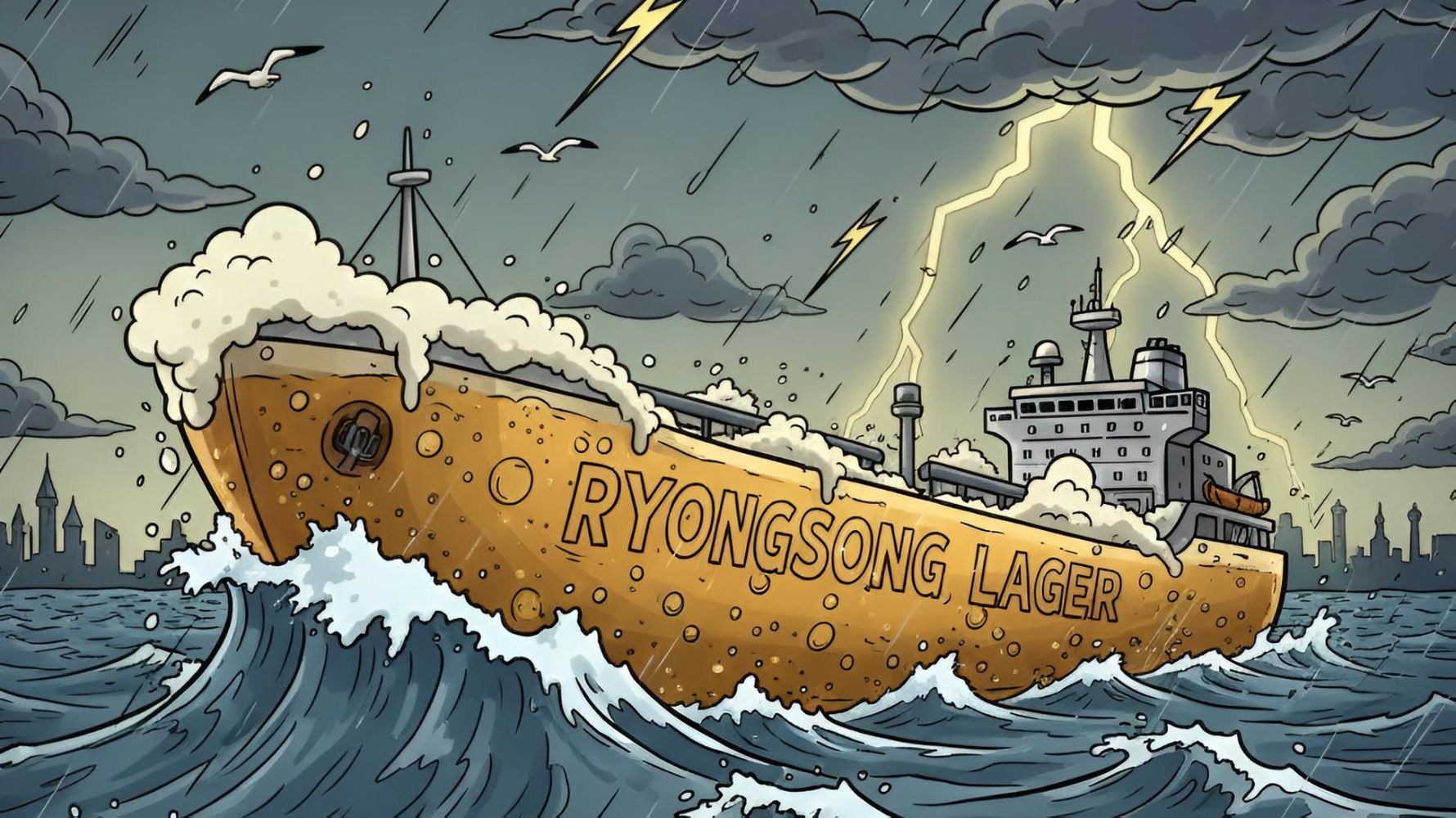
Forget the artillery shells and ballistic missiles—it turns out the latest strategic shipment from Pyongyang to Moscow is coming in a pint glass. As Russia finds itself increasingly reliant on its hermit-kingdom neighbor for, well, everything, North Korea is stepping up to quench the Kremlin’s thirst.
According to recent records uncovered by NK News, the Pyongyang-based Ryongsong Trading Company is officially slated to export beer to a Russian firm in Vladivostok. It seems the “no-limits” partnership between the two nations has finally reached the most important frontier of all: the bottom of a bottle.
As with anything involving the Hermit Kingdom, the paper trail is as murky as a poorly filtered stout. The records point to several entities that might just be the same company in different trench coats: Ryongsung Trading Corporation, Ryongsong Trading Co. Ltd., and Ryongsong Trading Company. While the names are a alphabet soup of confusion, the track record is clear—these guys are seasoned veterans of the sanctions-evasion game. In fact, Ryongsong is reportedly the owner of the Ocean Sky, a 5,800-ton tanker previously caught up in UN investigations for being “sold” to North Korea under suspicious circumstances. While the Ocean Sky is usually busy with illicit oil transfers, one has to wonder if they’ll repurpose the hull to float a literal sea of lager across the Sea of Japan. Shipping beer via a sanctioned weapons-linked tanker? That’s one way to ensure your cargo has “body.”
On the receiving end of this logistics chain is Rostkorsnab, a Vladivostok-based importer that filed an official declaration for “Ryongsong Beer” on December 18. Details on the liquid itself are harder to find than a private Wi-Fi signal in Pyongyang, but the “citizen journalism” of the beer world—Untappd—offers a grim preview. The brew currently sits at a stellar 2.4-star rating, largely reviewed by Russian tourists who describe the experience with the kind of brave stoicism usually reserved for bread lines. One intrepid reviewer noted a “vegetal” profile, while another simply called it “dire.” For those keeping score at home, that puts it firmly in the “only drink this if the alternative is a Siberian winter” category.
We recently reported that the global beer market is projected to grow at a 7% CAGR through 2035, driven largely by a surge in craft innovation. We didn’t exactly have “Russian ghost beer fleet” on our 2025 bingo card, and we’re left wondering if the analysts at Fact.MR accounted for sanctioned tankers full of North Korean lager when they crunched those numbers. Probably not. Still, geopolitics is a thirsty business, and here at b33r.xyz, we remain firm in our editorial stance: even if it’s coming from a sanctioned weapons firm and tastes like wet cardboard, it’s usually better to have a cold one than not.