
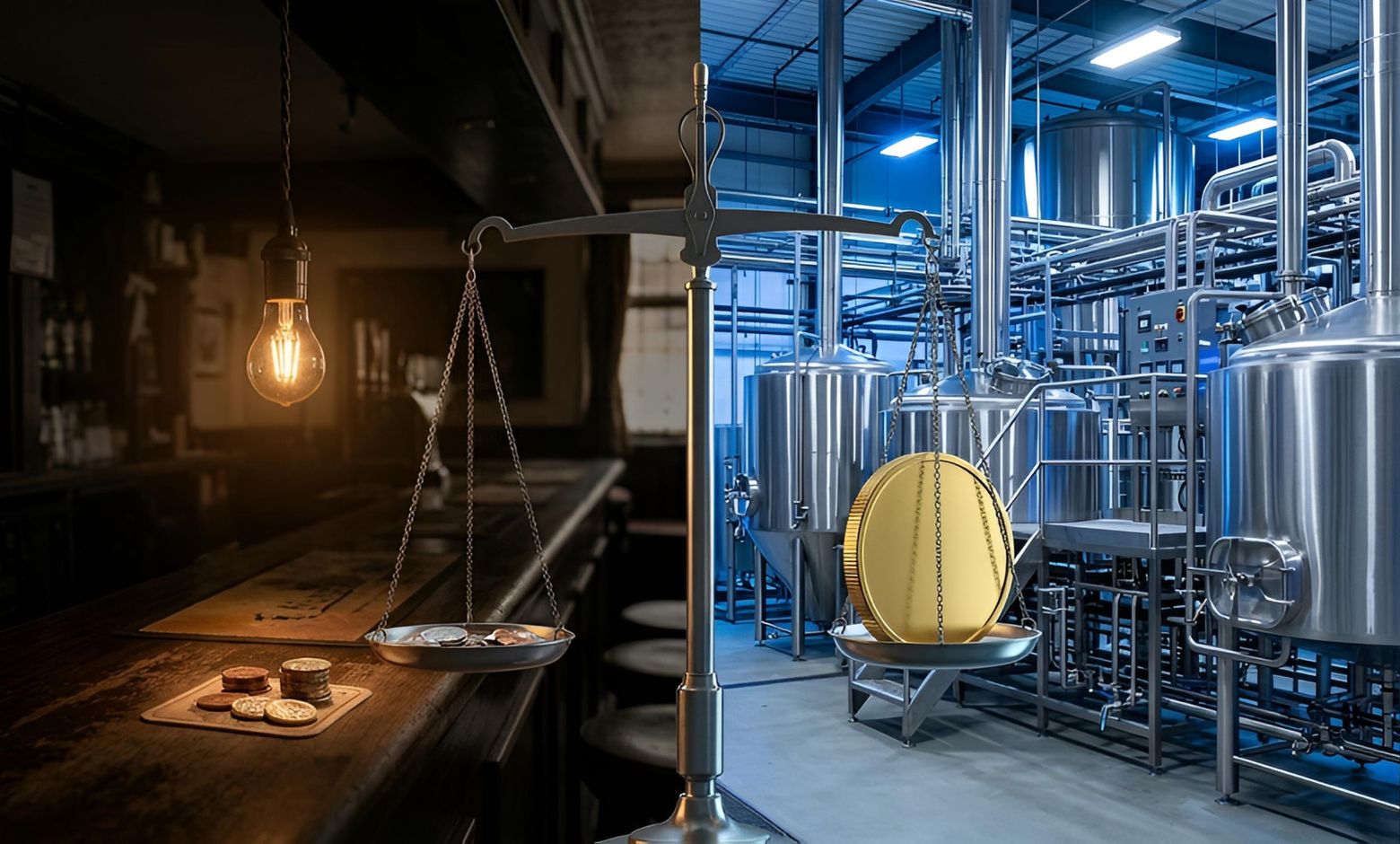
In the world of British hospitality, the margins are often thinner than the head on a poorly poured pilsner. So, when the Department for Energy Security and Net Zero announces a way to “slash bills,” the industry naturally leans in. This week, the UK government unveiled a taxpayer-funded energy-saving tool designed to help small and medium-sized pubs, restaurants, and hotels keep more of their hard-earned cash in their pockets—or, more accurately, in their taps.
The initiative, delivered by Zero Carbon Services, focuses on “behavioral change.” During a 12-month trial, 90 hospitality businesses saved an average of £2,500 a year. One pub in Bromley saved £48 a week, while another in Caterham saw its overnight energy use drop by 66%. Mark Chapman, CEO of Carbon Zero Services, put it in terms we can all appreciate: saving £2,000 is the equivalent of the profit from selling thousands of pints.
The Nanny in the Cellar
The “innovation” here is essentially a digital nudge. The tool provides real-time alerts to remind publicans to turn off extraction systems, lamps, and ovens. It is, in effect, a high-tech version of your father yelling at you for leaving the hallway light on, backed by £350,000 of taxpayer money.
While these behavioral tweaks are undoubtedly helpful, there is a certain “penny-wise, pound-foolish” irony to the timing. Asking a publican to save £5 a day by flicking a switch feels like a drop in the ocean when compared to the broader economic landscape. As we’ve recently noted, London’s pint prices are already facing a significant hike following the latest budget. When the cost of simply pouring a beer is being driven up by tax and duty increases, the government’s suggestion that the industry can “save its way to success” by dimming the lights feels less like a strategy and more like a distraction. It is essentially asking a drowning man to save water.
The Eight-Million-Pound Pint
Tucked away in the “Notes to Editors” of the same press release is a far more staggering figure. Under the Industrial Energy Transformation Fund (IETF), Molson Coors Brewing Company UK Limited was awarded a grant of £8,557,525.
Unlike the local pub in Bromley saving £48 a week through “behavioral change,” Molson Coors is tasked with “deep decarbonisation deployment” at its Burton upon Trent facility. To put that in perspective, you would need to run the government’s “energy-saving tool” in about 3,400 small pubs for an entire year just to match the value of the check handed to the makers of Carling and Coors Light.
What Is “Deep Decarbonization,” Anyway?
The government is light on the technical specifics of what Molson Coors will actually do with the £8.5 million, but we can speculate. In the world of industrial brewing, “deep decarbonization” usually moves beyond just turning off the lights or adjusting the thermostat. It likely involves fundamental re-engineering:
- Heat Recovery: Capturing the massive amounts of steam generated during the boiling of the wort and recycling that thermal energy instead of letting it vanish into the English sky.
- Fuel Switching: Moving away from natural gas-fired boilers toward industrial-scale heat pumps or green hydrogen.
- Carbon Capture: Potentially scrubbing the CO2 produced during fermentation—the literal “breath” of the yeast—to be reused in carbonation or sold for industrial use.
Unlike the “behavioral” tweaks suggested for the local pub, these are capital-intensive shifts in how thermodynamics work on a factory floor. While the publican is rewarded for his memory, the industrial giant is being subsidized to rewrite its entire energy DNA.
A Band-Aid for a Rising Tide
Is “behavioral change” really the way forward for the UK’s pubs, or is the government simply playing for time? While every pound saved helps a publican survive another month, the scale of the challenge is global.
We have previously reported on how climate change is a fundamental threat to the European beer industry, with rising temperatures and droughts altering the very chemistry of our drinks. Brewers worldwide are already seeking more drastic technical solutions: in Brazil, researchers are using supercritical extraction to preserve hop quality against terroir shifts, while in the US, brewers are calling for lower-protein barley better suited to a warming world.
Against the backdrop of a changing planet, telling a pub owner to turn off the toaster overnight feels less like a solution and more like a tactical retreat. While these small efficiency gains are a welcome reprieve for the neighborhood local, they barely scratch the surface of the industry’s broader challenges. Small pubs are being handed “innovative suggestions” to manage their decline, while industrial giants are receiving the infrastructure to bypass it entirely. For the UK’s drinking culture to truly thrive in a warming world, it will need more than just a well-timed flick of a light switch—it will need the same kind of structural investment currently reserved for those at the top of the tap.