
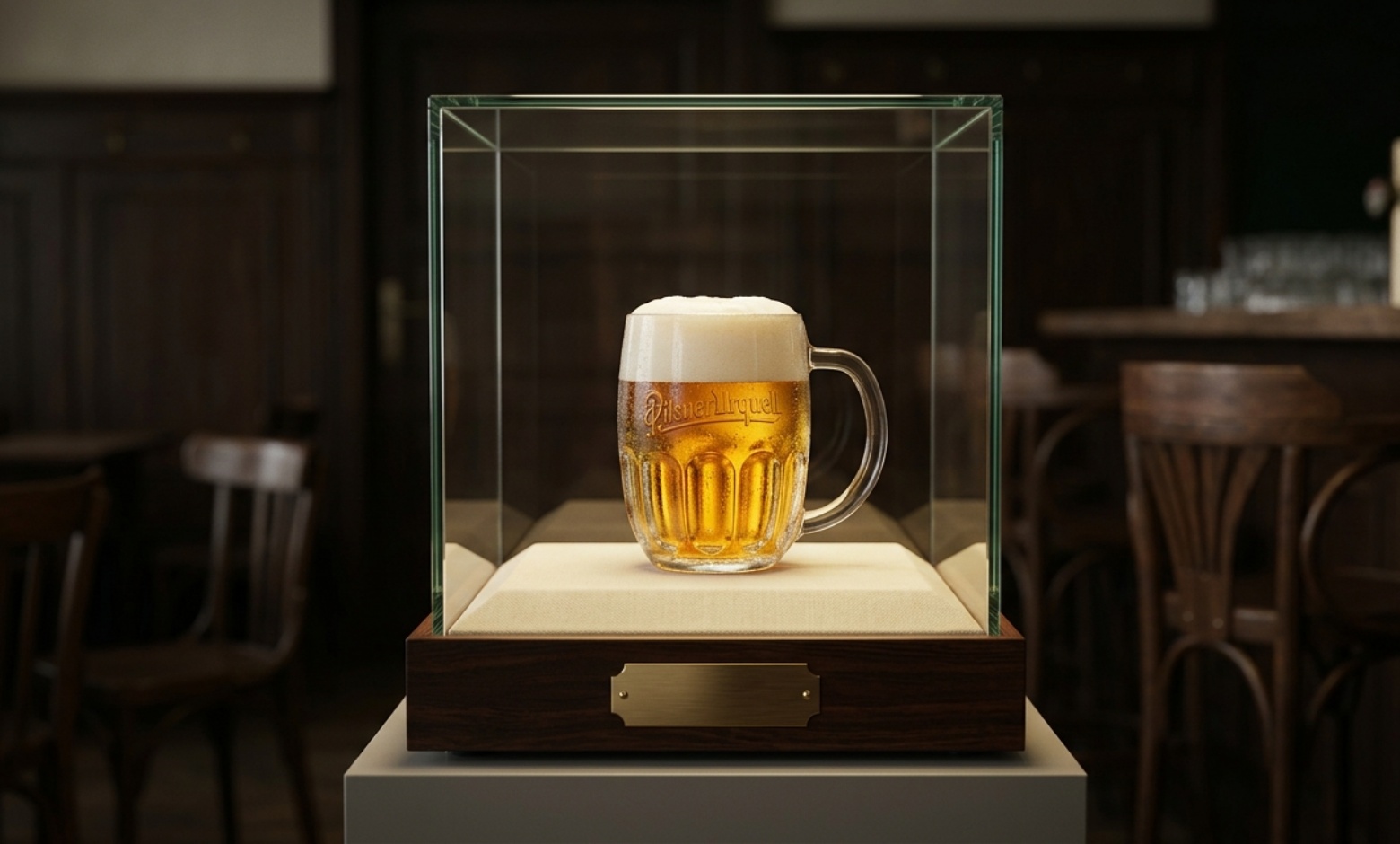
For decades, the Czech Republic has occupied a position of global moral—or at least fermented—superiority, sitting comfortably atop the throne of per capita beer consumption. However, the latest data suggests the crown isn’t just slipping; it’s being traded in for a non-alcoholic seltzer. According to the Czech Beer and Malt Association, domestic beer consumption fell to a historic low in 2025, reaching a nadir not seen since records began.
The numbers make for sobering reading: per capita consumption plummeted to just 121 liters. While a decline of “eight large beers” per person annually might sound like a minor dietary adjustment to the uninitiated, in the land of Pilsner Urquell, it represents a cultural tectonic shift.
The Death of the Hospoda
The most glaring casualty of this shift is the traditional Czech pub, or hospoda. Historically, the hospoda served as the nation’s living room, a democratic space where the “liquid bread” flowed as freely as the political gossip. Yet, the habit of the “afternoon pint” is increasingly being replaced by the “sofa and supermarket” lifestyle.
According to Prague Daily News, beer consumption in pubs has dropped to less than 30% of total domestic demand—a staggering fall from the 50/50 split between on-trade and off-trade seen as recently as 2011. The causes are manifold: a 2013 tax hike on draft beer (which jumped from 15% to 21%) and rising energy costs have made the pub an expensive hobby. Furthermore, a generational divide has emerged; a Slevomat survey indicates that only one in ten young adults now visits a pub weekly. It seems Gen Z is more interested in “mindful drinking” than in the traditional art of the three-hour lunch.
The Rise of the “Dry” Side
While the traditional lager is taking a beating, the industry is finding a lukewarm silver lining in the “dry” sector. Non-alcoholic beer and flavored “coolers” saw a 4% increase in sales last year, a segment that has more than doubled in the last decade.
There is also a move toward quality over quantity. Even as volume drops, Czechs are gravitating toward premium 11- and 12-degree lagers, moving away from the lighter, cheaper draughts that once fueled the nation’s industrial workforce. As Tomáš Slunečko, director of the Czech Beer and Malt Association, noted, the trend is part of a broader European “softening” of the market where people are simply drinking less, but slightly better.
A Global Malaise?
The crisis isn’t strictly domestic. Czech beer exports—the pride of the national economy—fell by 8.2% year-on-year, with significant drops in core markets like Germany and Slovakia. This suggests that the global palate is shifting alongside the Czech one.
However, the “death of the pub” is not a universal constant. While the Czechs struggle, other markets show a surprising resilience in the face of economic headwinds. In the United States, despite a “year of correction” for the craft sector, the taproom remains a vital community hub as brewers find a “new normal.” Across the channel, the British are proving equally stubborn; the UK beer market is projected to reach £35 billion by 2032, suggesting that while the Czech hospoda is under siege, the English pub is digging in its heels.
Meanwhile, in France, the decline of the traditional pint is being met with a characteristically modern pivot. While the French are increasingly swapping the pint for the bubbles, they have successfully mitigated losses by leaning into digital distribution channels—a technological leap that the wood-paneled, analog world of the Czech village pub has yet to master.
The UNESCO Hail Mary
In a desperate bid to preserve what remains, the Czech Beer and Malt Association is leading a campaign to have Czech beer culture recognized by UNESCO as an intangible cultural heritage, following in the footsteps of Belgian beer culture.
It is a noble effort, though there is a certain irony in trying to save a living tradition by effectively turning it into a museum piece. Whether the hospoda can survive the twin pressures of inflation and the allure of the Netflix-and-supermarket-can remains to be seen. For now, the Czechs remain the world’s heaviest drinkers, but the gap is closing. At this rate, the next generation might have to find a new way to define their national identity—perhaps through exceptionally high-quality mineral water.