
In a move that suggests the marketing department and the health-conscious zeitgeist aren’t exactly on speaking terms, Modelo—the undisputed heavyweight champion of U.S. beer sales—has decided that what the youth of America really needs is more alcohol in fewer cans.
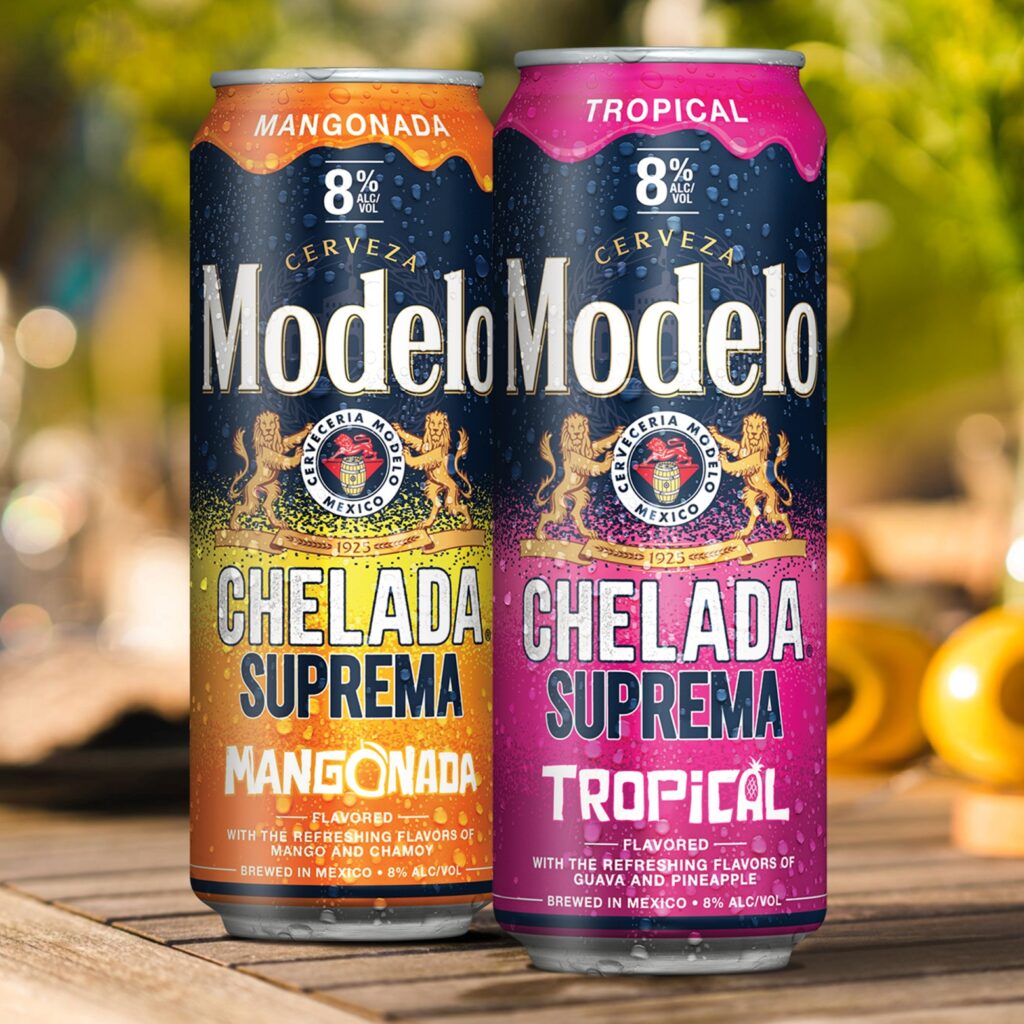
The brand recently announced the launch of Modelo Chelada Suprema, its first-ever high-ABV offering. Clocking in at a punchy 8% ABV and served in 24-ounce “tallboy” cans, the Suprema line debuts with two flavors: Mangonada (mango, chamoy, and spice) and Tropical (guava and pineapple).
According to the press release, Modelo is targeting the “pre-game” ritual, aiming to capture those spontaneous, social moments before Gen Z and Millennials head out for the night. It’s a bold play for a brand that already commands nearly 70% of the RTD Michelada market, but the strategy feels a bit like zigging while the rest of the world is zagging toward the nearest juice bar.

The High-ABV Paradox
There is a certain irony in launching an 8% ABV “flavor bomb” at a time when the industry is supposedly obsessed with the “sober gold rush.” We’ve previously noted a historic low in beer consumption as drinkers—particularly the younger cohorts—become increasingly mindful of their intake. Even Modelo seemed to acknowledge this trend earlier this year with the release of their non-alcoholic Limón y Sal Chelada.
By releasing Suprema, Modelo is effectively bookending the market: offering a path for those who want no alcohol, and a fast track for those who want all of it. The brand claims this satisfies a demand for “bold, high-proof experiences,” but it stands in stark contrast to the image of the “mindful drinker” that has dominated industry headlines for the last two years.
Unfiltered Connection or Just Efficient Inebriation?
The marketing leans heavily into nostalgia for “unfiltered connection,” attempting to position an 8% ABV canned cocktail as the antidote to a “chronically online” existence. It’s an evocative sentiment, though one might argue that doubling the alcohol content of a standard beer is less about “connection” and more about efficient, high-velocity intoxication.
Whether the market actually needs a high-octane pineapple-guava hybrid right now remains to be seen. While the “Better-for-You” movement remains a powerhouse, there is a counter-current of drinkers who are tired of seltzer-induced boredom and are looking for something that actually tastes—and hits—like a drink.
We’ll be keeping our eyes (and perhaps one very cautious liver) on the sales data to see if the Suprema launch is a masterstroke of market diversification or if Modelo is overestimating the appetite for a “pre-game” that ends before the main event even begins.