The $411 Billion Pint: U.S. Beer Market to Defy Gravity with Premium Pivot
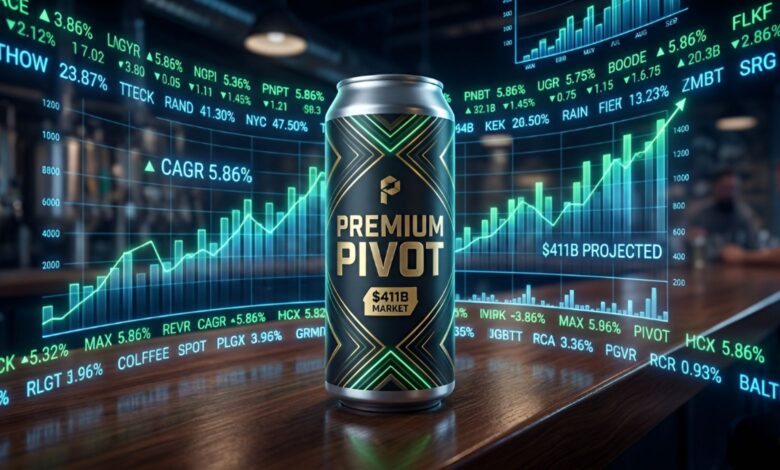
If you were betting on the demise of the American pint, you might want to hedge that wager. According to the latest United States Beer Market Report from Research and Markets, the industry is preparing for a massive financial expansion. Analysts project the market will swell from US$ 261.17 billion in 2025 to a staggering US$ 411.89 billion by 2033, cruising along at a compound annual growth rate (CAGR) of 5.86%.
On the surface, this bullish forecast feels a bit like a “hold my beer” moment for the industry, especially considering the headwinds facing small-scale producers. As we recently explored, the Brewers Association has characterized 2025 as a “year of correction” for craft beer, with production volumes dipping as the market recalibrates after years of unbridled expansion. However, while the volume of craft might be finding its new floor, the value of the total market is being propelled by the industry’s favorite buzzword: “premiumization.”
Quality Over Quantity: The Premium Surge
The report highlights a decisive shift away from budget-conscious, mass-market lagers toward premium and super-premium tiers. Consumers are drinking less, perhaps, but they are undeniably drinking “better”—or at least more expensive. This trend is bolstered by a resurgence in on-trade outlets like bars, pubs, and restaurants, where the “experience economy” allows for higher price points and artisanal storytelling.
Key drivers for this growth include:
- The Lighter Side: An increasing demand for lower-alcohol, lighter, and flavored beers that fit into more “active” lifestyles.
- Zero-Proof Power: As we previously reported, the non-alcoholic sector is hitting “stout scale,” evolving from a niche alternative to a mainstream growth engine.
However, the road to a $411 billion valuation isn’t without its potholes of irony. While macro-reports tout a “premium” future, the ground-level reality for some of the biggest players suggests a “vibe of value” is actually taking hold. As we noted regarding Constellation Brands’ recent outlook, there is a distinct budget crunch emerging. Even the giants are sensing that while consumers want premium liquid, their wallets are increasingly voting for value, creating a tension between the industry’s luxury aspirations and the consumer’s shrinking disposable income.
The Cost of the Pour
It isn’t all sunshine and barrel-aged stouts. The path to 2033 is littered with logistical landmines. Breweries are currently grappling with unstable prices for primary raw materials—specifically barley and hops—which remain sensitive to climate volatility and supply chain hiccups. Furthermore, the industry faces fierce competition from “crossover” drinks like ciders, hard seltzers and RTDs, as well as the rising cost of aluminum for packaging.
Glass vs. Aluminum: The Vessel War
The Research and Markets report notes that glass containers continue to be a favored package type in the American beer industry, largely due to their long-standing association with premium branding and traditional “bottle-clinking” aesthetics. However, here at b33r.xyz, we’ve noticed a parallel shift that the broader reports might be underplaying. Driven by a push for sustainability and the rise of outdoor consumption, the aluminum can market is being propelled toward its own US$ 5.3 billion U.S. milestone. Glass may have the legacy, but the can has the momentum.
In short: the “year of correction” might have trimmed the fat, but the American beer market is looking to lean into a future where the liquid is lighter, the price tag is heavier, and the “premium” label has to work twice as hard to justify itself.