Aluminum Cans Outpace Bottles in U.S. Market as Draft Beer Taps Into a Post-Pandemic Recovery
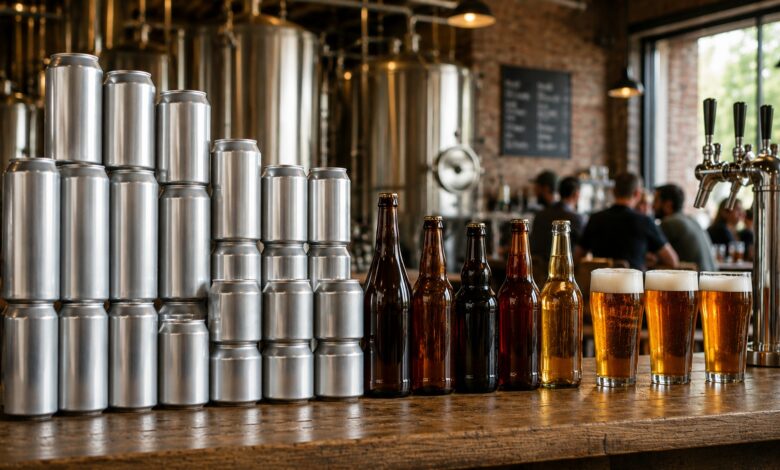
Aluminum cans remain the definitive package of choice for the United States beer market, securing 63.4 percent of total volume, according to new data released by the Beer Institute. The trade association’s latest packaging mix report highlights a stabilizing domestic landscape where glass bottles command 27.1 percent of the market, while draft beer continues a slow ascent, accounting for 9.6 percent of total volume.
The recovery of draft beer represents a 3.8 percentage-point increase since the height of the 2020 pandemic lockdowns. While keg volume still trails historical pre-pandemic benchmarks, the upward trend reflects a sustained consumer return to on-premise venues such as bars, taverns, and restaurants across the country.
The overall domestic preference for aluminum underscores long-term structural shifts in the American supply chain, favored by brewers for its shipping efficiency and recyclability. The format’s momentum shows little sign of waning; separate projections indicate that sustainability initiatives and craft segment adoption are on track to propel the U.S. beer can market to a $5.3 billion milestone.
However, this aluminum dominance does not extend universally across all retail segments. Imported beer continues to skew toward glass packaging more heavily than the overall U.S. market. In 2025, imported beer volume was 53 percent glass bottles, 41 percent aluminum cans, and 6 percent draft, reflecting the traditional, bottle-forward packaging mix of many leading international brands that rely on glass for heritage positioning.
For domestic brands, glass bottles maintain a steady, if diminished, quarter-share of the market, preserved primarily for premium and legacy products. This centuries-old container format occasionally still enjoys a marketing rebirth; notably, the Kelce-backed Garage Beer brand recently launched a western expansion utilizing a campaign that playfully framed the “breakthrough technology” of glass as a novel innovation.
To capitalize on the modest on-premise revival, the Beer Institute is using the data to lobby for federal legislative support. The group is actively advocating for the bipartisan CHEERS Act, a bill intended to provide tax incentives for hospitality businesses upgrading to energy-efficient draft systems. Industry proponents argue that modernizing taproom infrastructure is crucial to sustaining draft volume growth and supporting commercial venues dependent on draft margins.