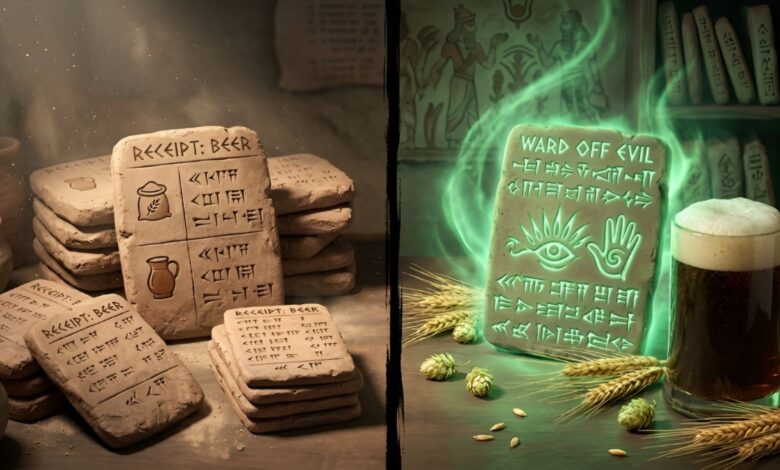
It appears that four millennia ago in Mesopotamia, the two primary pillars of civilization were already firmly in place: the fear of the supernatural and the urgent requirement for a cold one. According to a recent report from the University of Copenhagen, researchers have completed the digitization of a massive collection of cuneiform tablets that had been gathering dust at the National Museum of Denmark for over a century. The results prove that while the Sumerian and Akkadian languages are long dead, the human urge to keep a running tab at the local tavern is eternal.
Among the haul of “hidden treasures” are texts ranging from medical treatments to royal decrees, but the real star of the show is a humble receipt for beer. While King Gilgamesh—who appears in a regnal list within the collection—was busy seeking immortality, his subjects were apparently more concerned with ensuring their barley-based beverage deliveries were accurately logged. It is a comforting realization that before the invention of the secure PDF or the Excel spreadsheet, the cutting edge of 2000 BCE technology was being used to track bar tabs.
The tablets also highlight a sophisticated, if somewhat paranoid, bureaucracy. The collection includes “apotropaic rituals”—essentially magical spells designed to ward off evil—proving that the ancient world was a place where you might need a divine incantation just to get through the workweek. Researchers found that even mundane administrative tasks were treated with a level of detail that would make a modern auditor flinch, recording everything from livestock deaths to the exact amount of grain-derived debt owed by the citizenry.
Interestingly, a portion of these tablets originated from the Syrian city of Hama before being looted by Assyrian warriors in 720 BCE. This indicates that even in the Iron Age, conquering forces were willing to go to war, plunder a city, and then dutifully carry back the paperwork. It suggests that the Assyrian Empire wasn’t just built on chariots and iron spears, but on an exhaustive archive of other people’s receipts and religious manuals.
The work of researchers like Troels Pank Arbøll has effectively brought these “commonplace” documents into the digital age, demonstrating that history isn’t just composed of grand battles and golden crowns; it’s built on the backs of accountants and brewers. The next time you find yourself staring at a confusing line item on your bar bill, take solace in the fact that someone in Mesopotamia was doing the exact same thing four millennia ago—only they had to bake theirs in an oven to make it official.
Ultimately, the University of Copenhagen’s project reminds us that human nature is remarkably consistent. Whether it is a magical spell to keep the demons at bay or a receipt for a weekend’s worth of fermented grain, we have always been a species obsessed with documenting our fears and our refreshments. Some things, it seems, never go out of style—they just get harder to read without a PhD in cuneiform.