Is the Global Cider Market a Threat to Beer?
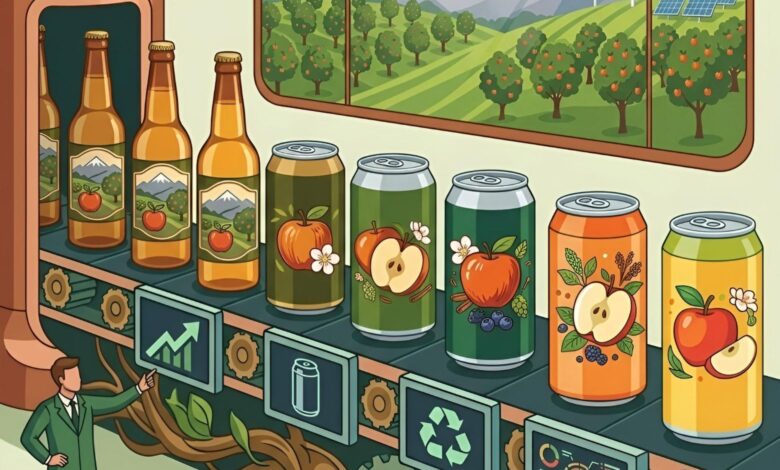
The global beverage landscape is undergoing a significant transformation, with cider emerging as a potent challenger to traditional pints. According to a report by Indian company Maximize Market Research LLC.—a firm based in Pune, India, that specializes in competitive intelligence and market forecasting across 45 countries—the global cider market is projected to reach nearly $26.9 billion by 2032.
This 6.4% compound annual growth rate (CAGR) is being fueled by a fundamental shift in consumer behavior, particularly a move toward “cleaner” and lower-sugar profiles. For the beer industry, the rise of the Global Cider Market represents a complex dynamic: it is attracting a “beer-adjacent” audience that seeks sessionability but prefers gluten-free or fruit-forward alternatives.
The “Sugar Avoidance” Premium
One of the most striking insights from the research is that cider’s growth isn’t just about volume; it’s about a behavioral shift away from sweet alcopops. Consumers are increasingly willing to pay a premium for dry, organic, and artisanal ciders. As wellness trends mature, these drinkers are decoupling value from quantity—paying more for a “better” product even if their total consumption remains steady.
“Can-ification” and the Sustainability Push
The shift in how cider reaches the consumer is also mirroring the broader craft movement. While glass bottles still hold a significant portion of the market, aluminum cans are the fastest-growing packaging format. This transition is about more than just convenience; it is a logistical and environmental necessity.
We have previously discussed how craft sustainability is expected to propel the beer cans market to a $5.3 billion milestone, and cider is riding this exact same wave. Aluminum’s recyclability and lighter shipping weight allow small-batch cideries to reduce their carbon footprint while reaching “outdoor consumption” occasions—like hiking and festivals—where glass was previously a dealbreaker.
Regional Engines of Growth
While Europe remains the undisputed heavyweight—holding over 38% of the market share—North America is the primary engine for innovation. U.S. and Canadian producers are driving the “craft fermentation” movement by experimenting with:
- Botanical infusions and hopped ciders.
- Barrel-aging techniques borrowed from the spirits world.
- Spiced variants, which are currently the fastest-growing flavor sub-segment.
The Digital Shift
The way these products are sold is also changing. According to the report, online distribution is expected to become a dominant channel through the end of the decade. From subscription boxes to direct-to-consumer “cider clubs,” the source indicates that digital storefronts are allowing small producers in regions like the Pacific Northwest or parts of Mexico to compete on a global stage.
Conclusion: Threat or Opportunity?
Ultimately, the data suggests that cider isn’t necessarily “killing” beer, but it is redefining the boundaries of the craft category. For brewers, the takeaway is clear: the modern drinker isn’t loyal to a single grain or fruit; they are loyal to quality, sustainability, and transparency. Whether it comes from a malted mash or a pressed apple, the demand for sophisticated fermentation is only going up.