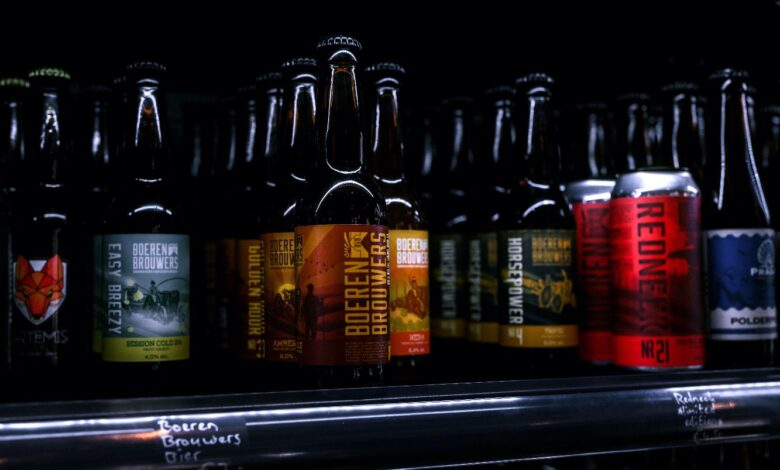
Apparently, the average Dutch beer drinker has reached their limit paying top prices at home. Recent research reported by Biernet shows that more and more Dutch consumers are making a trek to their Belgian and German neighbors—not to soak in the culture, but to stock their beer stash with noticeably cheaper suds.
The National Beer Survey 2025 reveals that 41% of beer drinkers occasionally cross the border just to stock up on beer. Alongside this cross-border buzz, the survey highlights the continued rise in popularity of non-alcoholic craft beers. This yearly survey was carried out by Ruigrok Research & Consultancy for the Dutch brewers’ association, Nederlandse Brouwers.
The reason is simple: beer prices in the Netherlands are a bit spicier than over the border, thanks to excise taxes. So, while the local Dutch drinker may visit their neighborhood pub dutifully, secretly they’re crossing the border to benefit from lower taxes and attractive deals. Maybe that makes the beer taste extra sweet across the border? Either way, it saves quite a bit of money.
According to Tax Foundation Europe, the Netherlands boasts the 9th highest beer tax in all of the EU, clocking in at roughly €0.135 per typical 330 ml bottle. Meanwhile, their friendly neighbors Belgium and Germany leisurely sit at 17th and 26th place, respectively—no wonder their beer flows a bit more freely in price.
The EU 27 beer excise tax regime is governed by Directive 92/83/EEC, which sets out harmonized minimum excise duty rates to be applied by all member states. For beer, the minimum excise duty is approximately €1.87 per hectoliter per degree Plato or €0.748 per hectoliter per degree of alcohol, which roughly translates to about €0.03 per 330 ml bottle of 5% beer. However, most EU countries impose significantly higher excise duties depending on their national policies, leading to wide variations in beer prices across the EU. For example, Finland has one of the highest beer excise rates, which can reach nearly 20 times the EU minimum. Luxembourg applies one of the lowest excise duty rates on beer, often close to the EU minimum level set by Directive 92/83/EEC.